




In 2026, a lab-grown diamond is no longer a science experiment. It is the fastest-growing category in Indian jewellery — and India is one of the world's largest producers of them.
What Is a Lab-Grown Diamond?
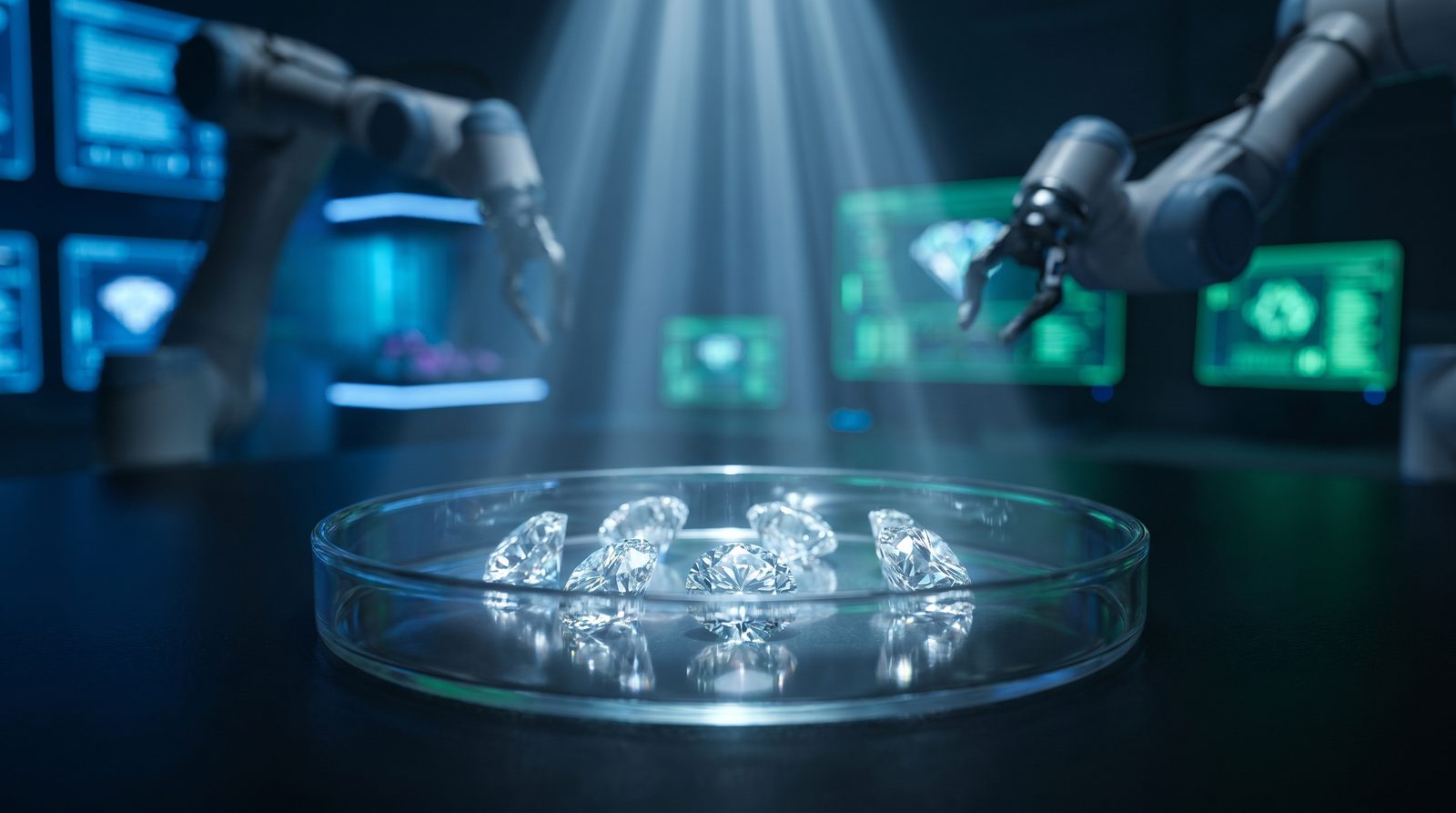
A lab-grown diamond is a real diamond — chemically, physically, and optically identical to a mined diamond — created in a controlled laboratory environment rather than extracted from the earth. The GIA, IGI, and every major certification body classify lab-grown diamonds as genuine diamonds, not simulants.
Two production methods dominate:
- High-Pressure High-Temperature (HPHT) recreates the natural diamond-forming conditions deep within the earth, producing stones in days rather than billions of years.
- Chemical Vapour Deposition (CVD) grows diamond crystals atom by atom from carbon-rich gas, allowing precise control over size, clarity, and colour.
The Indian Numbers
India's position in the global lab-grown diamond market is unique — it is simultaneously a top producer, a top processor, and one of the fastest-growing consumer markets:
- $450 million: India's lab-grown diamond market size, 2023–24
- $1.2 billion: projected market size by 2030–31
- 14.8% CAGR: projected growth rate of the Indian lab-grown diamond jewellery market
- Surat: global capital of lab-grown diamond processing alongside its mined-diamond role
- 40–70%: typical price advantage of lab-grown over comparable mined stones
Why Indian Buyers Are Shifting
The lab-grown shift in India is being driven by five forces operating simultaneously:
1. Value at the same aesthetic. A lab-grown solitaire of 1.5 carats with VVS clarity costs a fraction of an equivalent mined stone. For the same budget, a buyer either gets a substantially larger stone or significantly higher clarity.
2. Generational sensibility. Urban buyers under 35 increasingly do not carry the assumption that 'real diamond means mined.' For this segment, real means real. The origin is a feature of the story, not the value.
3. Sustainability framing. Lab-grown stones avoid the environmental footprint of large-scale diamond mining.
4. Indian manufacturing pride. Mined diamonds depend on imported rough. Lab-grown diamonds are increasingly produced and processed entirely in India.
5. Versatility and daily-wear. Because lab-grown stones cost less per carat, buyers are more willing to wear them daily — unlocking fine-jewellery-grade diamonds in everyday pieces, not locked in a vault.
The Brand Response
- Pure-play lab-grown brands like Aukera and Solitario have moved fastest and captured the early-adopter segment.
- Established brands launching dedicated lab-grown lines — Tanishq, CaratLane, and several heritage houses now have parallel lab-grown collections.
- Traditional houses watching carefully — heritage maisons with deep mined-diamond inventories have moved more cautiously.
The Open Questions
- Resale value: Lab-grown diamonds do not currently hold resale value the way mined diamonds historically have.
- Disclosure and traceability: Laser-inscribed certification, blockchain tracking, and IGI/GIA-grade verification are becoming standard.
- Heirloom positioning: Lab-grown stones are still establishing their own cultural narrative — and the brands that author it effectively will define the next decade.
The IIJA Frame
The IIJA Honours include the Best Lab-Grown Diamond Jewellery Brand category specifically because this segment is not a footnote — it is one of the defining chapters of Indian jewellery's next era.
Frequently Asked Questions
Are lab-grown diamonds real diamonds? Yes. Lab-grown diamonds are chemically, physically, and optically identical to mined diamonds. They are certified as real diamonds by the GIA, IGI, and all major gemological bodies.
How much do lab-grown diamonds cost compared to mined? Lab-grown diamonds typically cost 40–70% less than comparable mined diamonds of the same carat weight, colour, and clarity.
Is India a major producer of lab-grown diamonds? Yes. Surat is one of the world's largest centres for lab-grown diamond production and processing, with the Indian market projected to reach $1.2 billion by 2030–31.
Do lab-grown diamonds have resale value? Lab-grown diamonds currently have lower resale value than mined diamonds, though the long-term market is still developing as the category matures.
Honour your house at the inaugural IIJA.
Fifty honours. Independently juried. Audited by an external firm. ₹21,000 per category.